
E-invoices
Invoices that arrive as data
More and more invoices come as XML in the European standard format, made for software, not for people. EMA keeps each one exactly as it arrived and shows it as an invoice anyone can read.
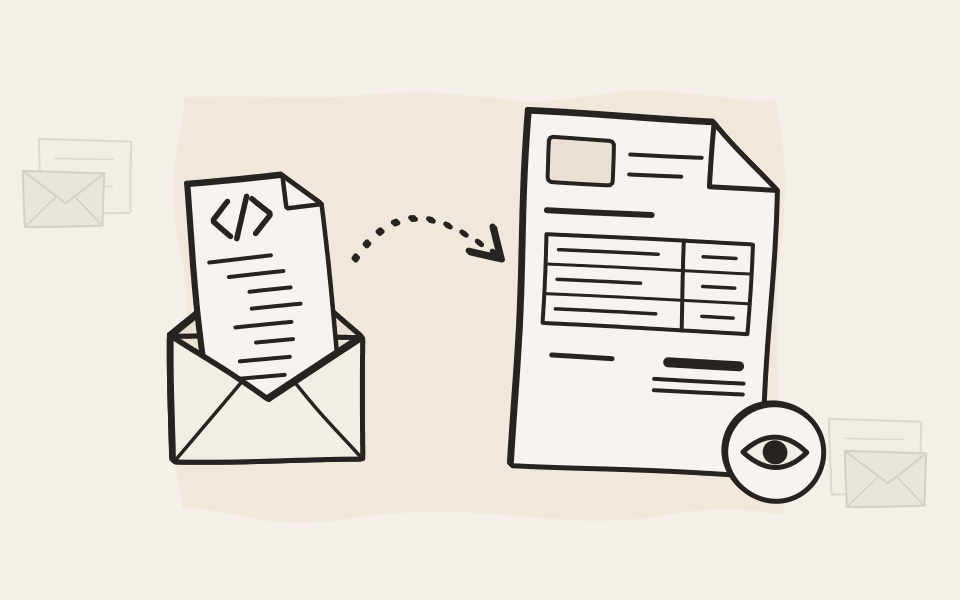
From every supplier, in one standard
Across the EU, invoices are moving to one European standard: structured XML that accounting software reads without typing. XRechnung in Germany and ZUGFeRD are versions of it. Your suppliers attach it to an email or send it through a portal, and it lands in your accounts payable mailbox next to the PDF invoices you get today. EMA archives both, as they arrive.
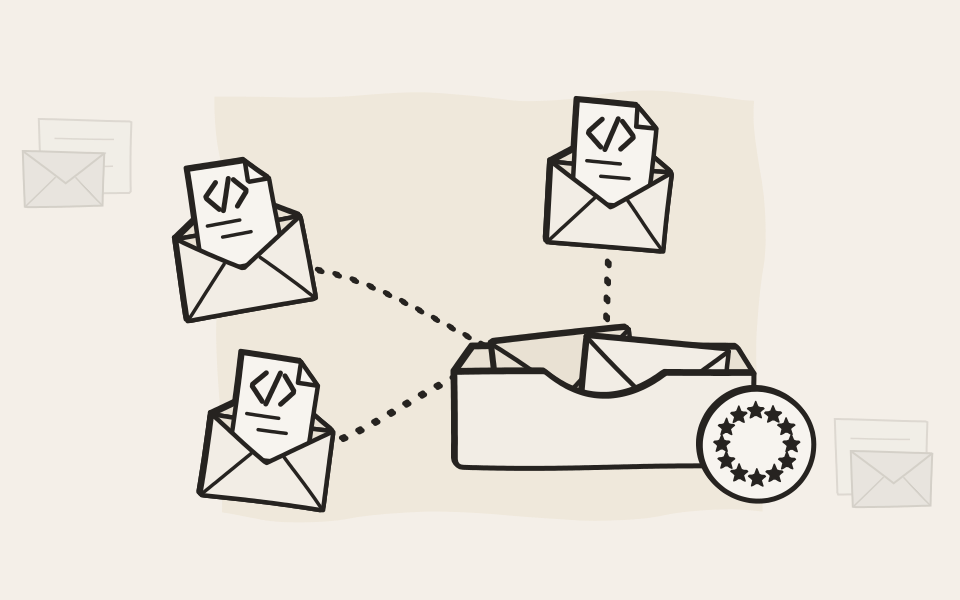
An accounts payable mailbox in EMA
Six supplier invoices from one week, some as XML, some as PDF. Four screens of the EMA web interface.
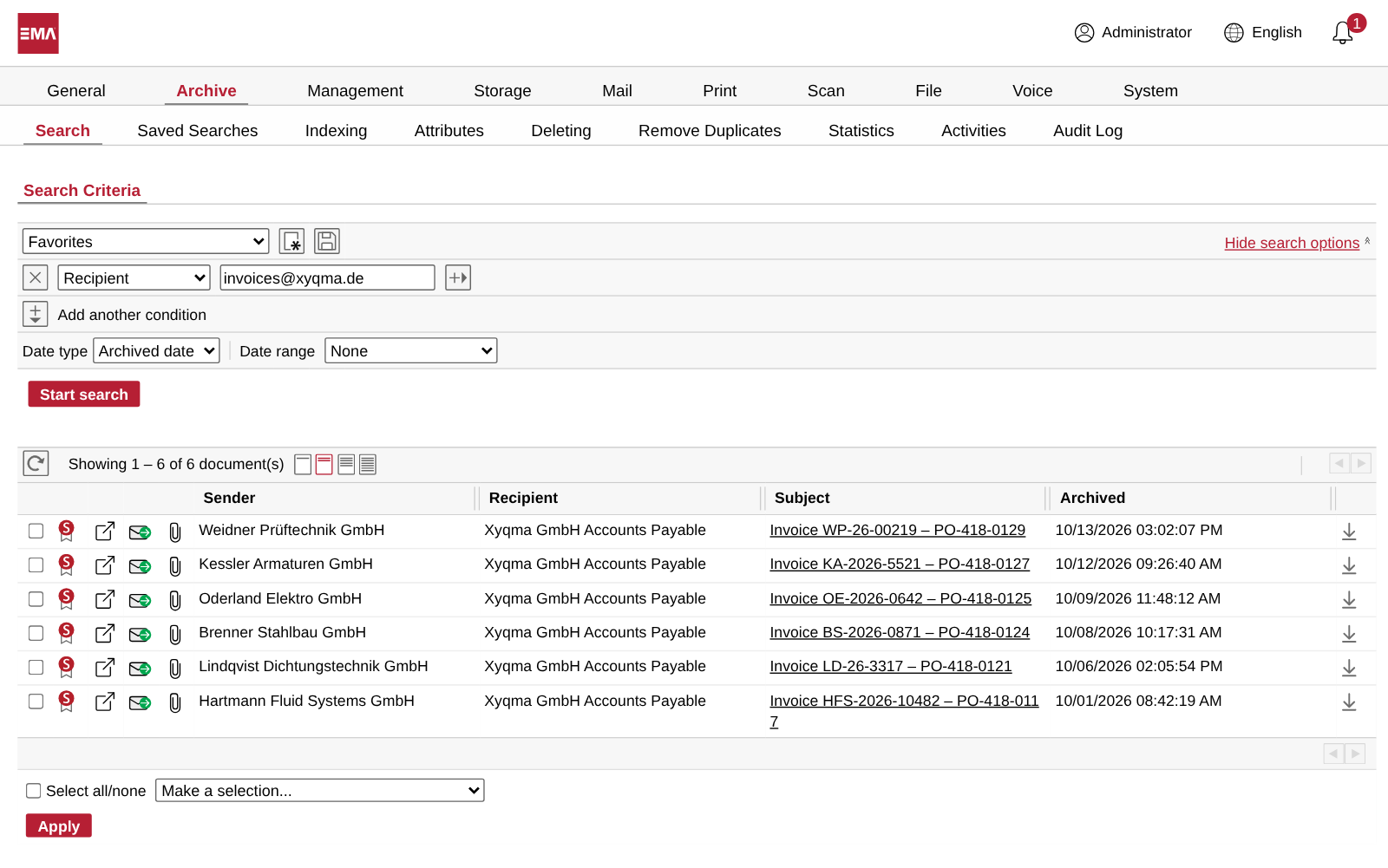
XML or PDF, side by side
Every invoice the suppliers sent, in one list. Whether it came as XML or as PDF makes no difference to finding it.
- One search: everything sent to the accounts payable mailbox.
- Signed on arrival, XML and PDF alike.
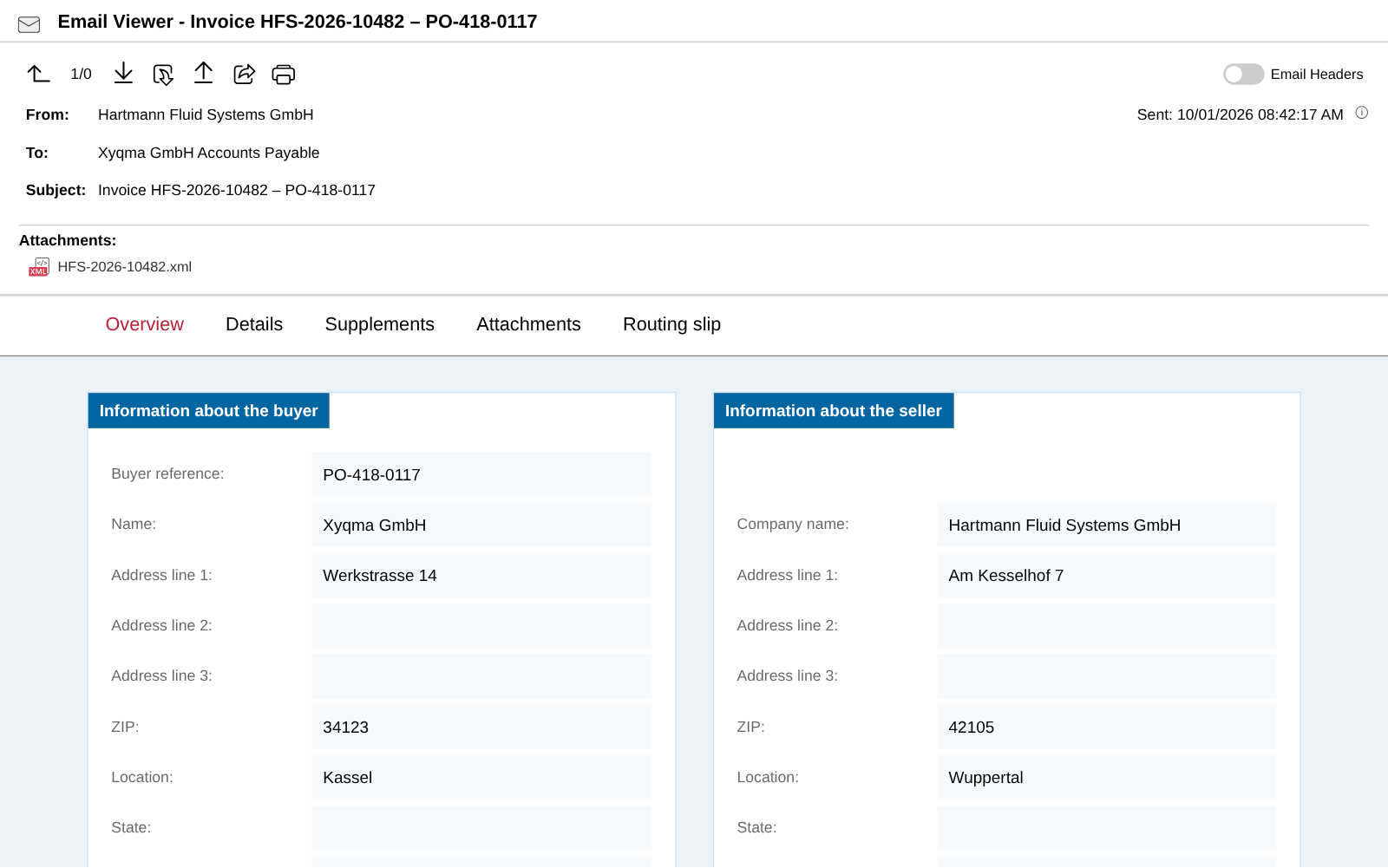
The XML, read as an invoice
Click the XML attachment and EMA shows buyer, seller, invoice data, lines and totals, laid out in tabs like an invoice. The file itself stays exactly as it arrived.
- The XML file, kept exactly as it arrived.
- Line items, supplements, attachments and the routing slip, each in its own tab.
- Print makes a PDF of the invoice.
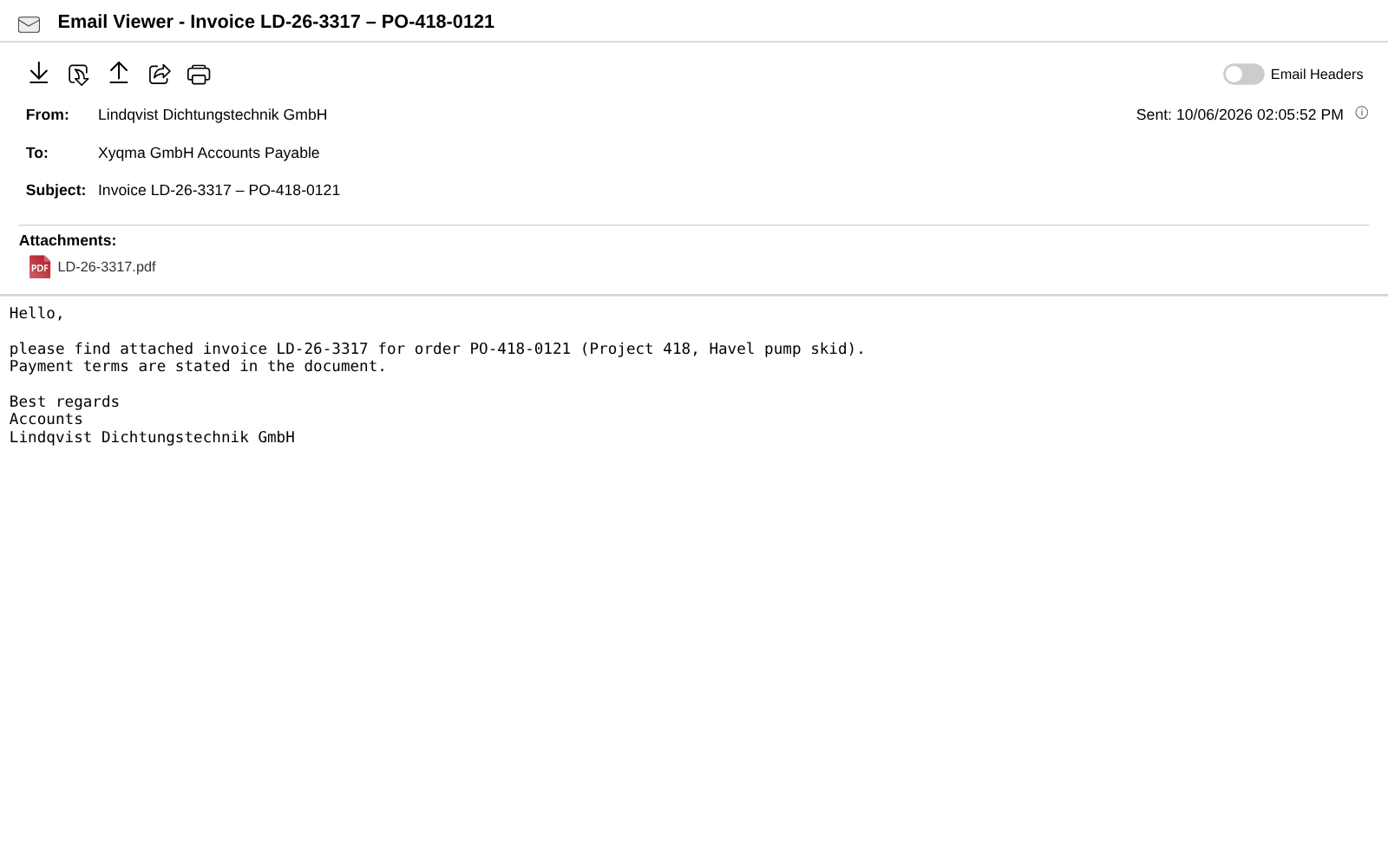
A PDF invoice, as it came
A supplier that still sends PDF: the mail and its invoice are archived the same way, signed, and the PDF opens with one click.
- The PDF invoice: one click opens it.
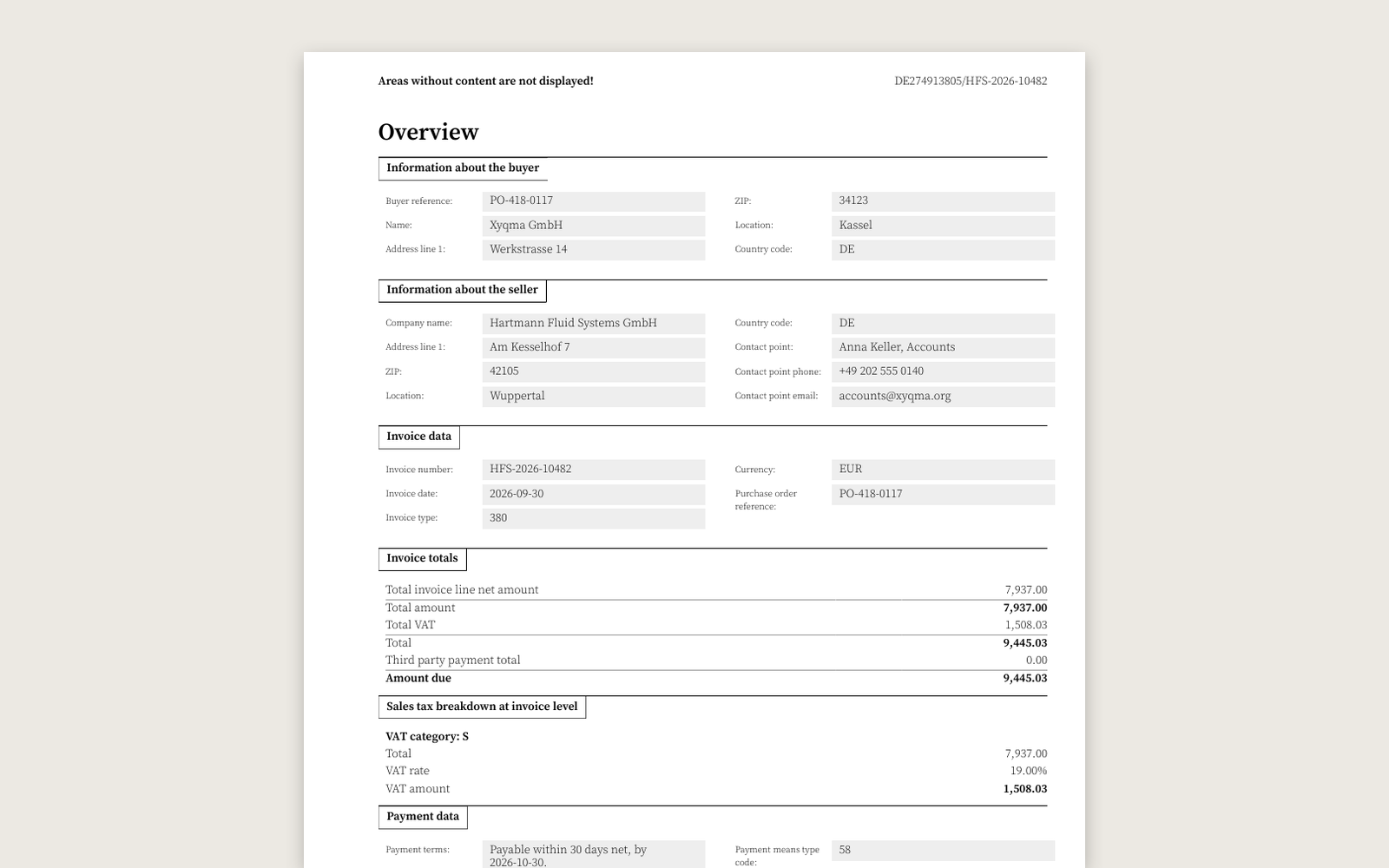
The XML invoice as a PDF
One click on Print turns the XML invoice into a PDF, ready to print, file or forward to someone who has never seen XML.
- Totals and VAT, read from the XML.
- Seller VAT number and invoice number on every page.
Who needs the invoice
One invoice, many readers
Accounts payable is only the first. Here is who else asks for it, and when.
The approver wants it on paper
The project lead who signs off the invoice has never opened an XML file and shouldn't have to. One click in EMA turns it into a PDF to print or pass on. The XML stays in the archive as the original.
Next spring, someone asks about a payment
Search for the invoice number, the supplier, an order number or an amount, and EMA finds it inside the XML as well as in PDFs and mail. Tag invoices by supplier, project or cost centre with your own attributes, and the next search is shorter still.
How search works
The tax auditor, years later
For an e-invoice the XML is the original, and tax rules ask you to keep it in the format it arrived in, unchanged and readable for the whole retention period. EMA signs it on arrival, keeps it exactly as it came, and still shows it as an invoice the day the auditor asks.
Compliance with EMA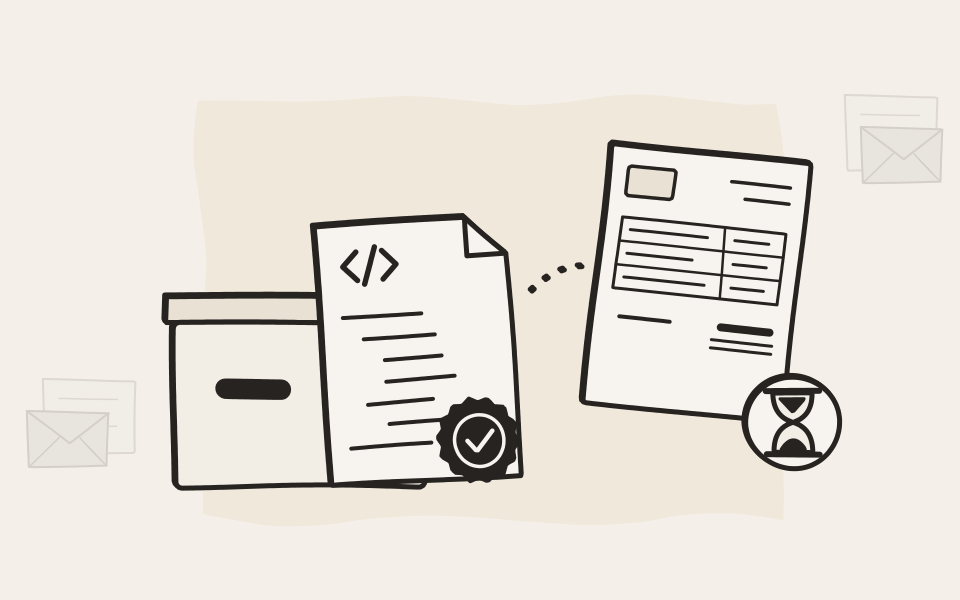
Your own invoices go out as XML too
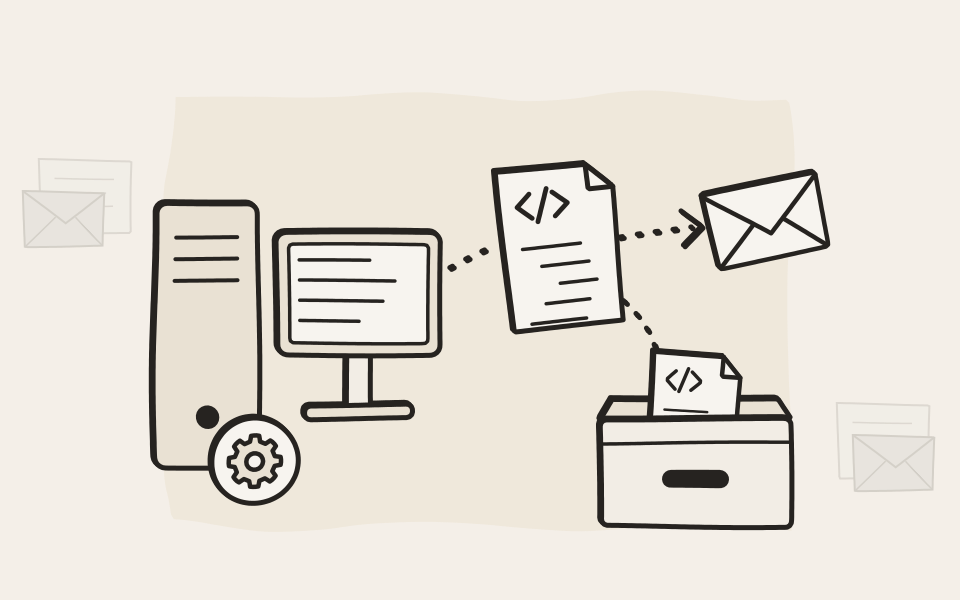
When your billing system sends e-invoices, archive the copies with EMA as well: from the sent mail, or as files from your ERP or SAP. EMA shows your outgoing invoices the same way as the incoming ones.
What EMA does
Every e-invoice, handled the same way
Nothing to set up and nothing to buy. It is part of EMA.
Recognised on its own
EMA spots an e-invoice in an attached or archived XML file. An XML file that isn't one is shown as plain text.
Kept as it arrived
The XML stays the original, byte for byte, with the email it came with.
Shown as an invoice
Buyer, seller, lines, totals and payment details, laid out for people to read.
PDF in one click
Print it, file it or forward it to anyone who needs it on paper.
Signed on arrival
Like every document in EMA, with a signature and a time stamp that show it hasn't changed.
Wherever you search
In the web interface, in the app and in Outlook. On by default, in every edition, at no extra cost.
Questions about e-invoices
Which e-invoice formats does EMA show?
E-invoices in the European standard format, in both of its XML forms (UBL and CII), whether they come as XRechnung, through Peppol or in another country's version of the standard. ZUGFeRD and Factur-X invoices are PDFs with the data inside, so they open as the PDF they are. Every other format is archived as it arrived, signed and searchable like any document.
Isn't a PDF copy of the e-invoice enough?
Not for the tax office. For an e-invoice the XML is the original, and you have to keep it in the format it arrived in. EMA keeps the XML and makes the PDF only when someone wants one, so you have both and never have to choose.
Do we still need an e-invoicing system?
For receiving, checking and booking invoices, yes: that is your accounting software's job. EMA is where every invoice is kept afterwards, together with the mail and documents around it, readable and findable for as long as you have to keep it.
When do e-invoices become mandatory?
Country by country. Germany, for example, has required every business to be able to receive them since 2025. From July 2030, invoices between businesses in different EU countries have to be e-invoices as well. Whatever date applies to you, EMA archives e-invoices today.
Can we find an invoice by its amount or order number?
Yes. EMA searches the content of the XML, so an invoice number, a supplier, an order number or an amount finds the invoice, just as it finds a word in a PDF or an email.
Does it cost extra?
No. The e-invoice view is part of EMA, switched on by default in every edition, with nothing extra to license.
Can our staff read e-invoices outside the web interface?
Yes. The e-invoice view works in the EMA web interface, in the EMA app and in Outlook.
Bring an invoice to the demo
Send us an e-invoice you received, and we'll show you in a demo how EMA archives it, shows it and finds it again.