
Compliance
Ready when someone asks
One day a tax auditor, a court or someone whose data you hold will ask to see the records. EMA keeps your mail, documents and chats complete and unchanged from the day they arrive, so you hand over exactly what was asked for, and nothing more.
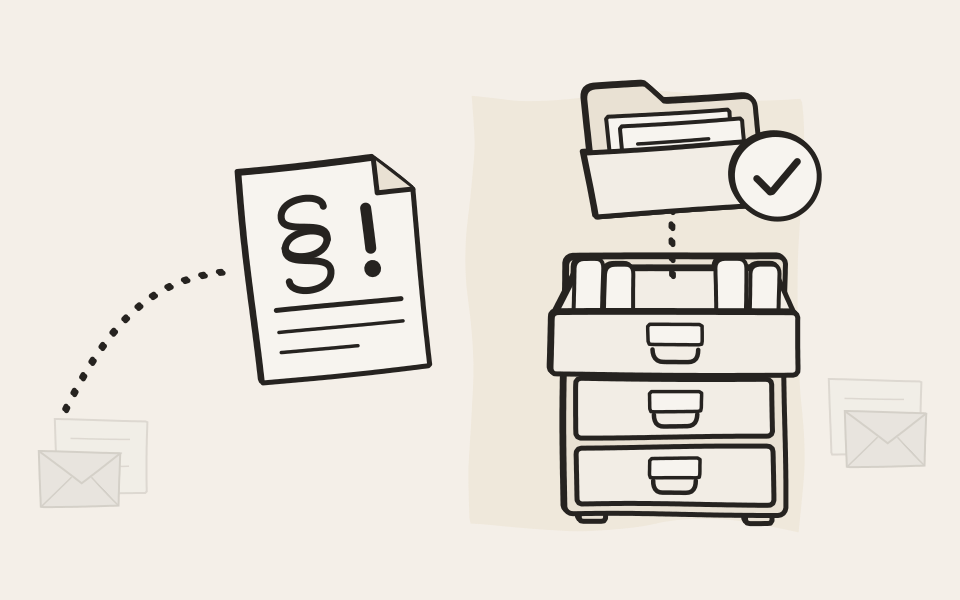
Archived as it arrives, kept by your rules
EMA archives every email, file, print job, scan and call as it comes in, before anyone can change or delete it. Each one gets a signature and a time stamp, and stays exactly as it was for as long as your rules say, not for as long as someone remembers to keep it.
How EMA protects every document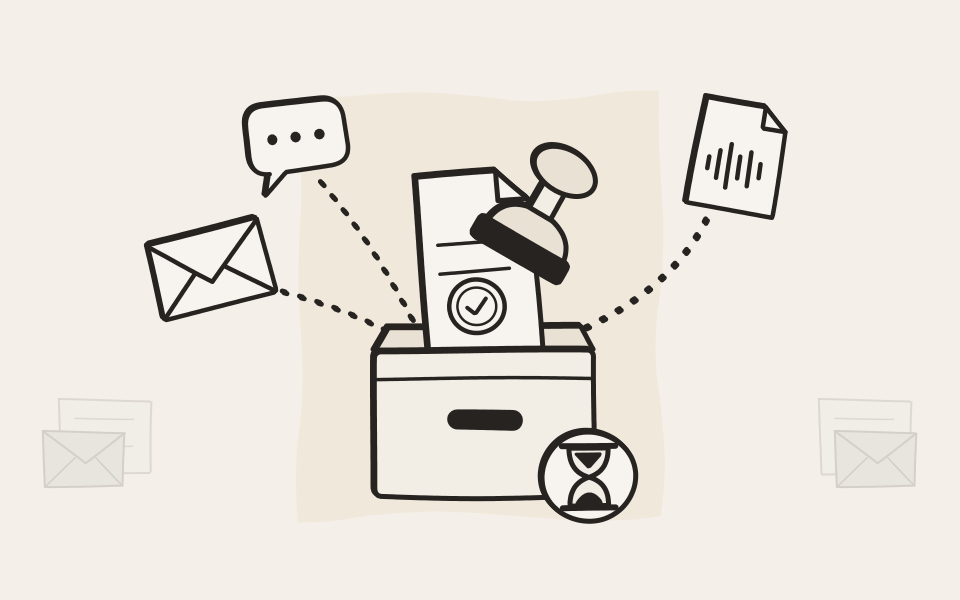
Who is asking?
Four requests, one archive
Each comes with a deadline. None of them needs a project.
The tax auditor wants to see the books
Invoices, contracts and the mail around them, from this year or from eight years ago, turn up in one search. Every document still carries the signature it got on the day it arrived, so you can show it hasn't changed since. Hand the auditor the originals, or an account that searches only what the audit covers.
E-invoices in EMA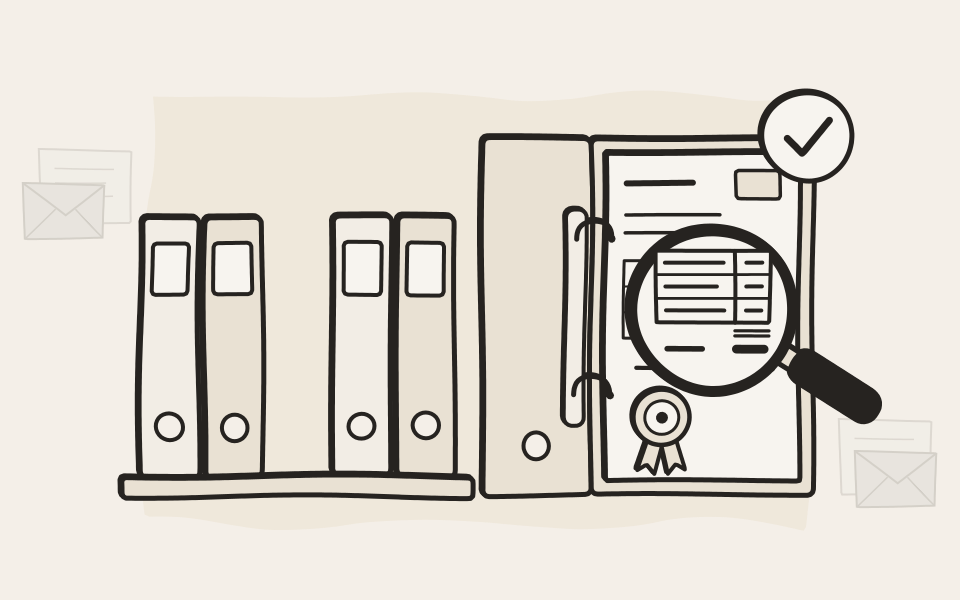
A court wants to see the evidence
Courts take documents as PDF. Search, tick the emails that matter, and EMA lays them out for printing, headers included, so they go to the court as one PDF. PDFs and Office documents go over as the originals. Your lawyer can show that each one is signed and unchanged since it was archived. If investigators want to search for themselves, give them an account that sees only what the case covers.
eDiscovery and legal hold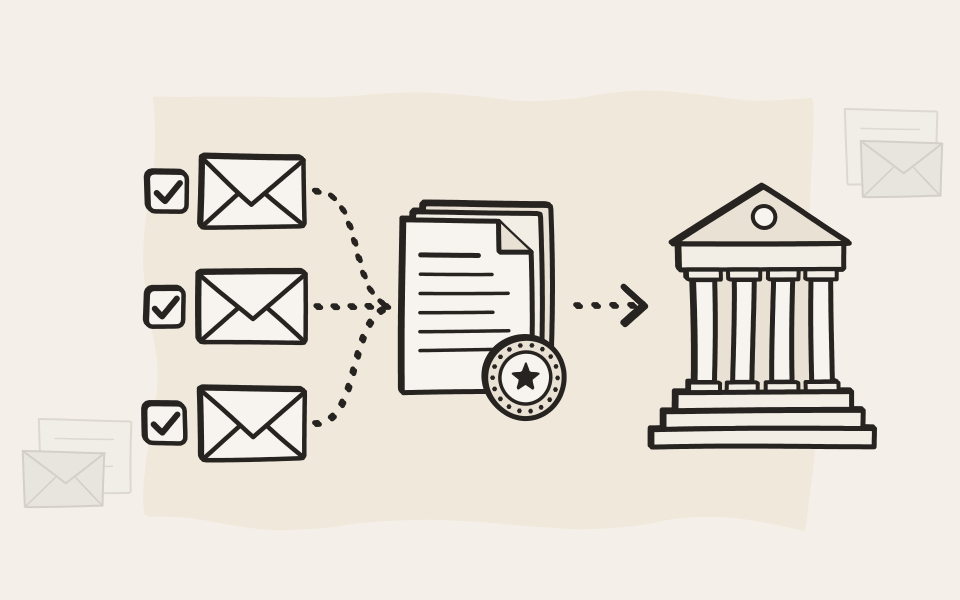
Someone asks what you hold about them
One search across every mailbox, file share and chat finds what you hold about a person, and you export it in one go. If they ask to be forgotten, deleting is just as controlled: only the admins you allow, two of them together if you wish, and never what a legal hold or a retention period still protects. Every deletion goes into the Audit Log.
Who sees what in EMA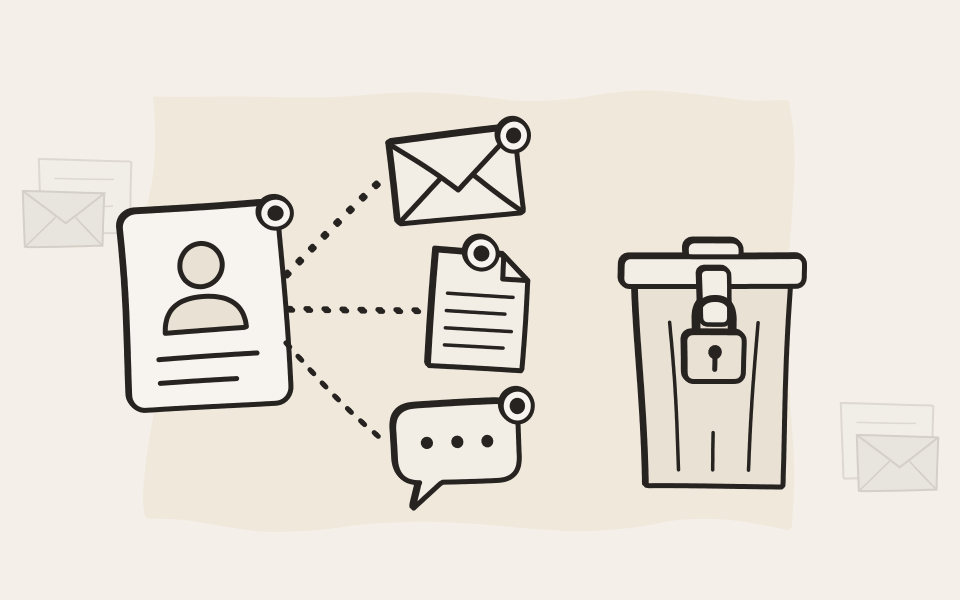
Keep it as long as the law says, then let it go
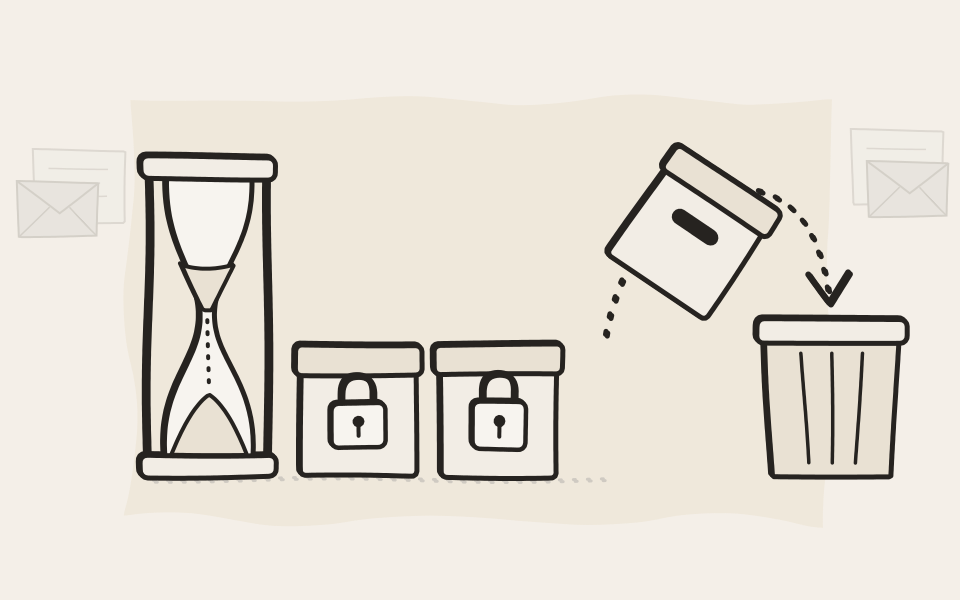
Set a minimum retention period, and nothing younger can be deleted, by anyone. Lock it, and it can only ever grow longer. Deletion policies then remove what has run its time, by saved search and age, on a schedule. Until you ask us in writing to switch deletion on, nothing can be deleted at all.
Proof
What you can show, years later
Every request ends with the same question: is this really what was there? Here is how you answer it.
Signed on arrival
Each document is signed and time-stamped by our signing service the moment it is archived. Change a single bit, and the signature breaks.
The Audit Log
Searches, exports, deletions and settings changes, each with a name and a time. The log is archived and signed like any document.
No admin acts alone
Deletions, exports and settings changes can each need two admins from two groups, signed in together.
Checked on a schedule
The Integrity Check compares the archive with its signatures and its backup, and tells you if anything is wrong.
Readable in ten years
Mail as standard messages, documents in their original formats, readable without EMA for as long as you keep them.
You choose where it lives
In your own server room, or in EMA Cloud in the region you choose.
The general legal rules for keeping business email are not quite as strict in the UK as in Germany, and the processes are less regulated. Still, we saw a real advantage in bringing in a solution that can also meet much stricter compliance rules and legal requirements, especially with an eye on being ready for the future across countries and on a secure setup for the long term. All the more so because in medical technology we work in a very sensitive field.

Questions about compliance
Which rules does EMA help us meet?
Every country sets its own periods for keeping business records, typically five to ten years, and its own rules for keeping them electronically: the GoBD in Germany, the BAO in Austria, the GeBüV in Switzerland, and their counterparts across the EU. EU VAT law adds that invoices must stay authentic, intact and readable for the whole period. They all ask the archive for the same things: complete, unchanged, findable and readable for years. That is what EMA does. Which periods apply to which records is a question for your tax adviser.
Does archiving with EMA make us GoBD compliant?
No software can promise that on its own, because the GoBD look at your whole process, from the invoice arriving to the books. EMA covers the archive part: every email is kept in the format it arrived in, headers and attachments included, as the GoBD ask, and every document stays complete, unchanged, signed and findable at once, with every step logged. Your procedure documentation then describes how EMA fits into your process.
Does a GDPR erasure request override our duty to keep records?
No. The GDPR itself makes an exception for records you must keep by law. Those stay until their retention period ends, and EMA's minimum retention makes sure nobody deletes them early by mistake. Everything else can be deleted, under your rules, with every deletion in the Audit Log.
How do we prove, years later, that a document was not changed?
Every document carries the signature and time stamp it got when it was archived. Click the signature icon on any document, and EMA checks it in front of you. If a single bit had changed, it would say so. The Audit Log shows who searched, opened or exported it since.
Can the tax auditor search the archive directly?
Yes, and only what you allow. Save a search for the records the audit covers, and give the auditor an account that sees nothing else: read-only, with its sign-ins and exports in the Audit Log. Or export the records as originals, as PDF or as a CSV list.
Can our admins change or delete archived documents?
Nobody can change an archived document. Deleting is off until you ask us in writing to switch it on, and even then nothing under a minimum retention period or a legal hold can go. You can make every deletion need two admins, and each one is logged.
Do we have to archive everything?
You decide. Archive every email, file, scan and call, or leave out what has no business value, such as newsletters or private folders, with filters you set. Whatever is archived stays complete: nobody can quietly take a document out later.
Where are our archived documents kept?
Where you choose. On EMA On-Premise they stay in your own server room, on your own storage. In EMA Cloud they stay in the region you choose, in your own instance, encrypted with your own key.
What about e-invoices?
EMA archives e-invoices in the European standard format, XRechnung and ZUGFeRD included, as they arrive, signed like everything else, and shows them as a readable invoice, not as XML. The E-invoices page tells you more.

Bring your auditor's checklist
Tell us which rules your records fall under, and we'll show you in a demo how EMA answers each point.